
INTRODUCTION
Speedball GO is a Trading Card Game based on the sport of Speedball and its players. This document contains all the guidelines and rules to play the game.
CARD TYPES
Player cards are the main focal point of the game. Opponents collect their squad of Player cards and use them in order to compete and win battles against their competitors.
The back of the card indicates whether it is a Male or a Female card.

You can view the Player's nationality, club and activity status on the right-hand section of the Player card. (If you don't see an "Active" sign, it means the player is retired)
Each player card has a score value in each of the 4 Speedball events: a rating out of 10 for the Solo, Singles and Doubles events, and a score number for each position in the Relay event. (Right-Left-Fore-Back)
Depending on the average rating of all 4 events, the overall rating of the card will be set. The overall rating determines the “class” of the card.
(Overall < 50.00) - Blue
(50.0 < Overall < 70.0) - Yellow
(70.0 < Overall < 85.0) - Purple
(85.0 < Overall) – Red
Black
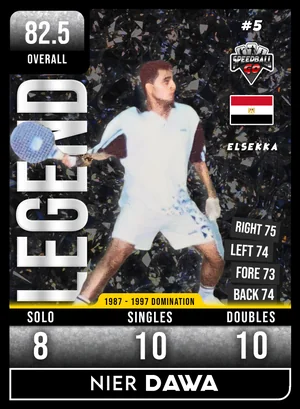
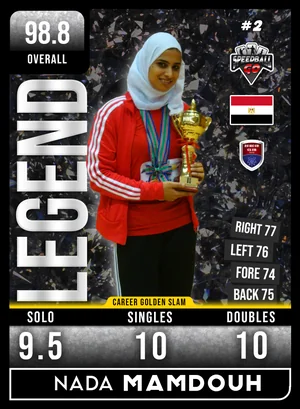
Legend cards are independent of overall rating, instead they are exclusive to Speedball players who have accomplished a unique or special achievement in Speedball.
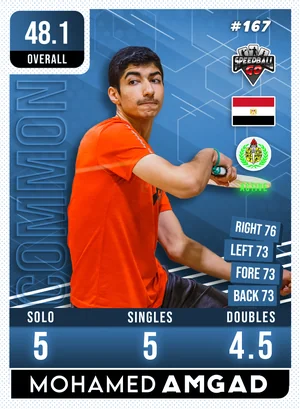 Common
Mohamed AMGAD
Common
Mohamed AMGAD
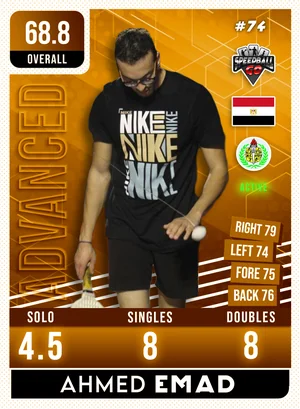 Advanced
Ahmed EMAD-ELDIN
Advanced
Ahmed EMAD-ELDIN
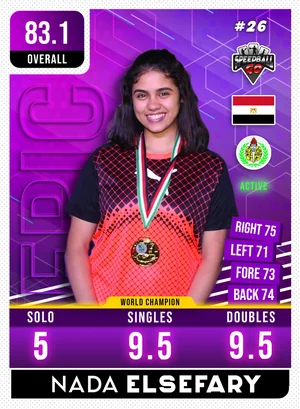 Epic
Nada ELSEFARY
Epic
Nada ELSEFARY
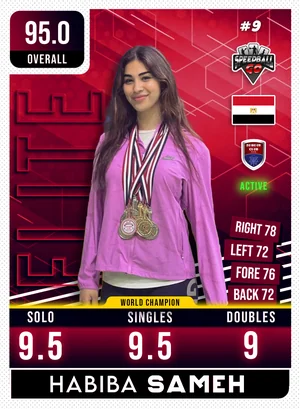 Elite
Habiba SAMEH
Legend
Nada MAMDOUH
Elite
Habiba SAMEH
Legend
Nada MAMDOUH
Another important piece of data in the player card is its card #. It is crucial to read the card # to check if you already have this card or not - even if it is a different version.
Cards get updated often, which results in the modification of its photo/scores/etc... In this case, the card # remains the same, but there will be an added "-X" next to it to indicate that this is an updated card. where X: is the update number.
For example, a card with a card number = #75-1 means that the card number is #75 and that this is the first updated version.
Once a card gets updated, the older version becomes available only through the Legacy Pack, while every other pack will produce the latest card version.
CARD TYPES
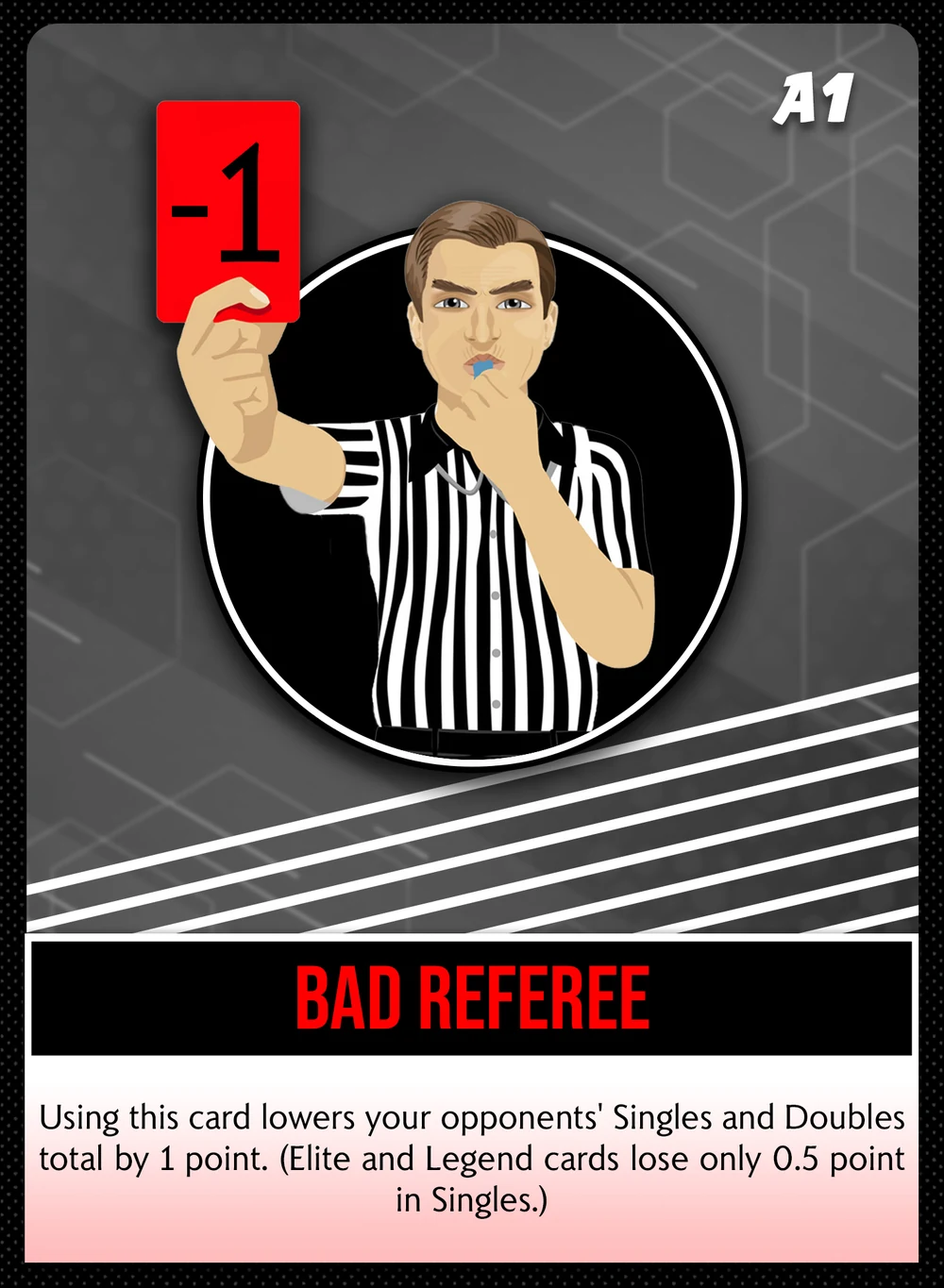
Attributes are cards that assist your players or weaken your opponents' players.
Normal attributes are characterized by their grey color and their card number that starts with "A". Normal attributes are generally played by adding them alongside the player cards (with a few exceptions). The function and description of each attribute is illustrated at the bottom of the card. Their effect applies only to the round in-which they are used.
CARD TYPES
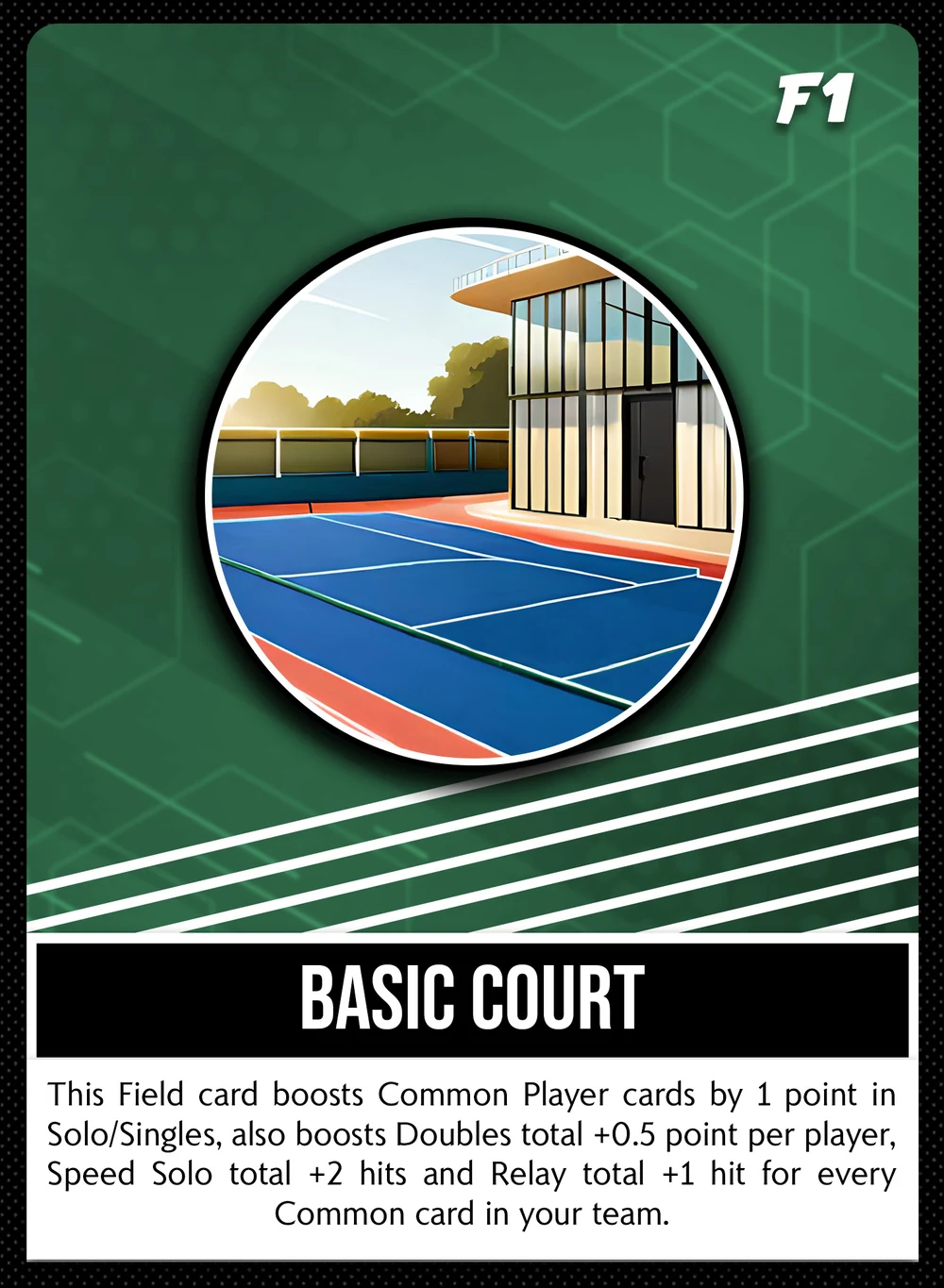
Field cards on the other hand, are characterized by their light green color and their card number that starts with "F".
Field cards are played prior to the start of the round (before playing the player cards) on a designated field slot. Their effect will continue to the end of the game or until they are replaced by another field card.
Once a player plays a field card, it cannot be replaced on the same round.
CARD TYPES
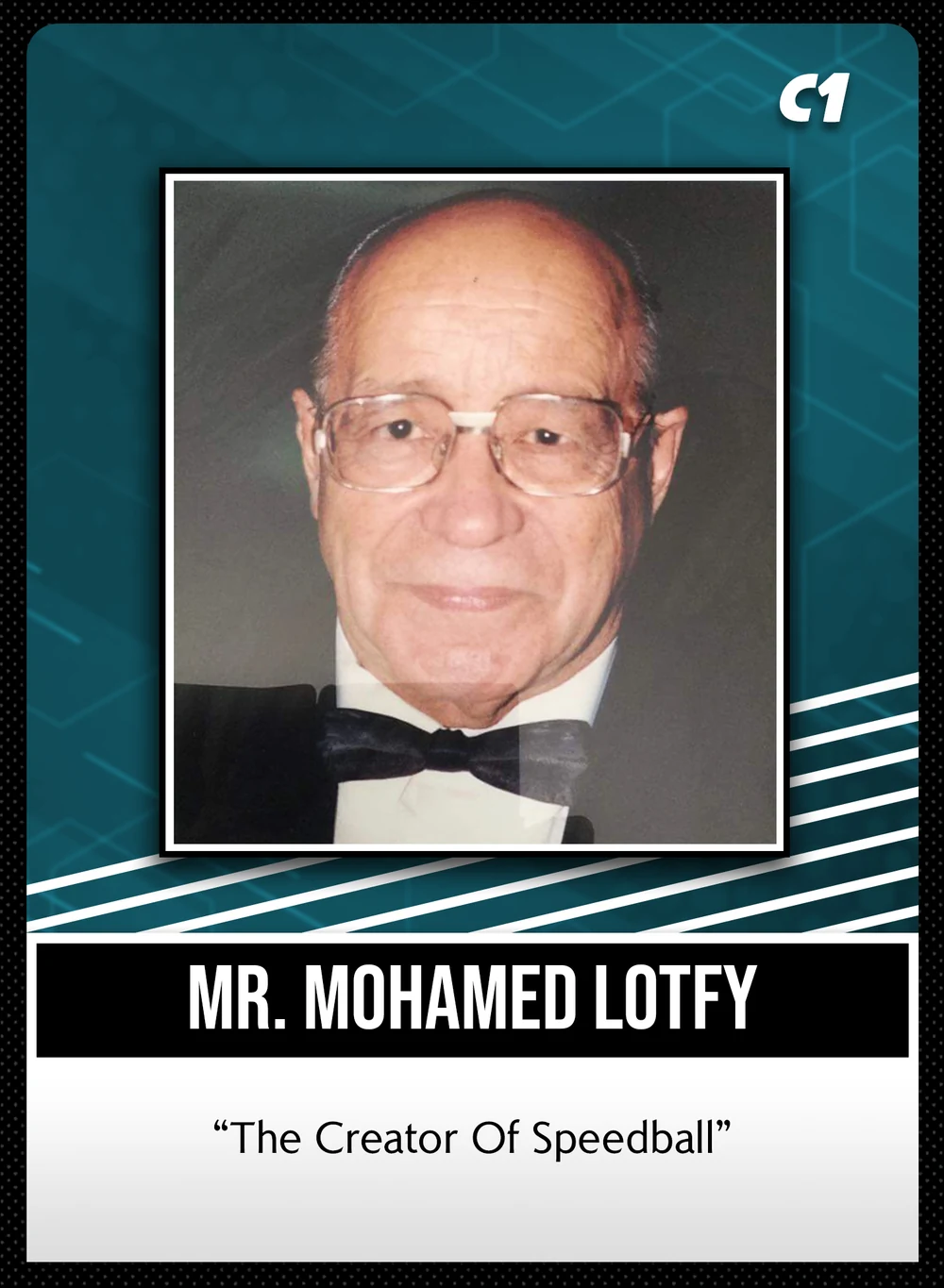
They are rare, unique, non-playable cards that depict a historic or unique character/event/object in the history of Speedball, or Speedball GO.
They are just for the players to collect and trade.

DECK BUILDING
Your deck must contain the following:
You cannot put multiple copies of the same player card (cards with the same #) in your deck even if they are different versions. You also cannot put two cards (with different card #) if they contain the same player.
you cannot use Hana YEHIA #75 together with Hana YEHIA #75-1, since they are 2 versions of the same card. You also cannot use Hazem YASSER #7 and Hazem YASSER #16 in the same deck.
You are also not allowed to put 2 or more copies of the same attribute card in your deck.
GAME MODES
This mode is the most common way to play, and it is the mode currently available on our website. It can be played by up to 4 players.
Sequence Mode has two versions: Simple Mode and Energy Mode. Both use the same event sequence, field phase, player-card selection, attribute phase, scoring rules and tie resolution.
Simple Mode is the standard ruleset. Each player's deck contains 15 male cards, 15 female cards, up to 5 attribute cards and up to 3 field cards. Attribute cards do not cost energy in this mode.
Energy Mode unlocks at battle level 5. It keeps the same Sequence Mode foundation, then adds energy costs, larger attribute planning, player roles and a 25% EXP bonus for every finishing position.
If players are tied at the end of the game, compare these totals in order. As soon as one player has more than the other tied players, that player wins:
If the tie persists after all six checks, all tied players are declared winners.
Build your deck, master the rules, and become the ultimate Speedball GO champion.